
New publication by Dr. Vašíček
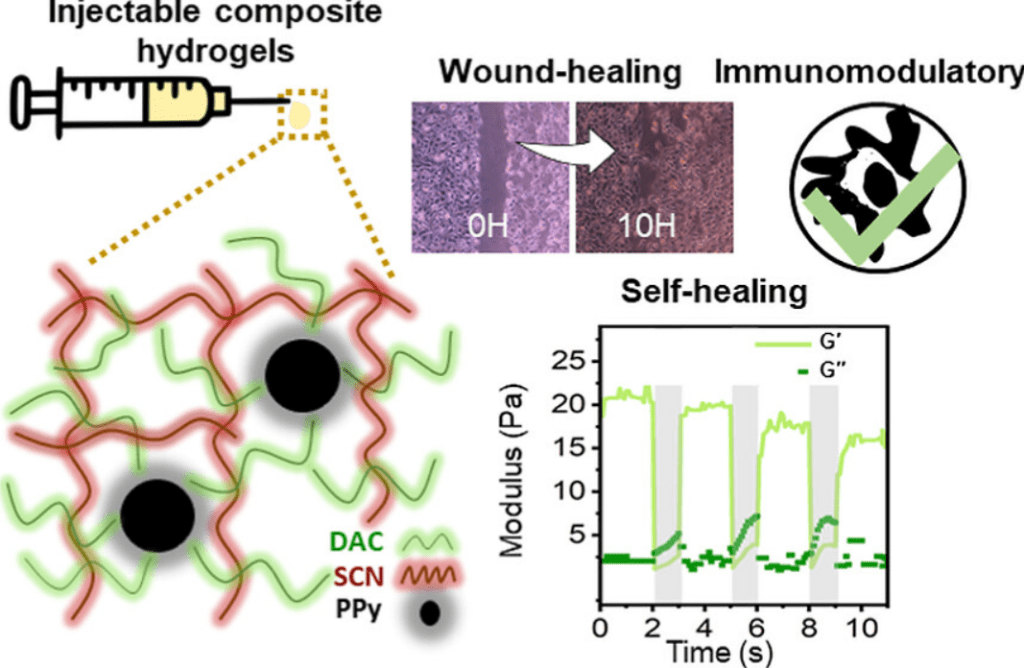
Dr. Vašíček, who collaborates with Tomas Bata University in Zlín, contributed to a newly published article focused on the development of an injectable composite hydrogel with covalently bound polypyrrole. The hydrogel is based on dialdehyde cellulose and half-acetylated chitosan, where dynamic imine bonds provide self-healing properties and covalently anchored polypyrrole modifies rheological behavior while contributing antioxidative and anti-inflammatory effects. The materials exhibited shear-thinning behavior, rapid self-healing, and injectability. The hydrogels were non-cytotoxic toward fibroblasts and macrophages, accelerated wound closure in scratch assays, and reduced nitric oxide and IL-6 production in LPS-stimulated macrophages. These SCN/DAC/PPy hydrogels therefore represent a promising platform for the development of advanced wound dressings.